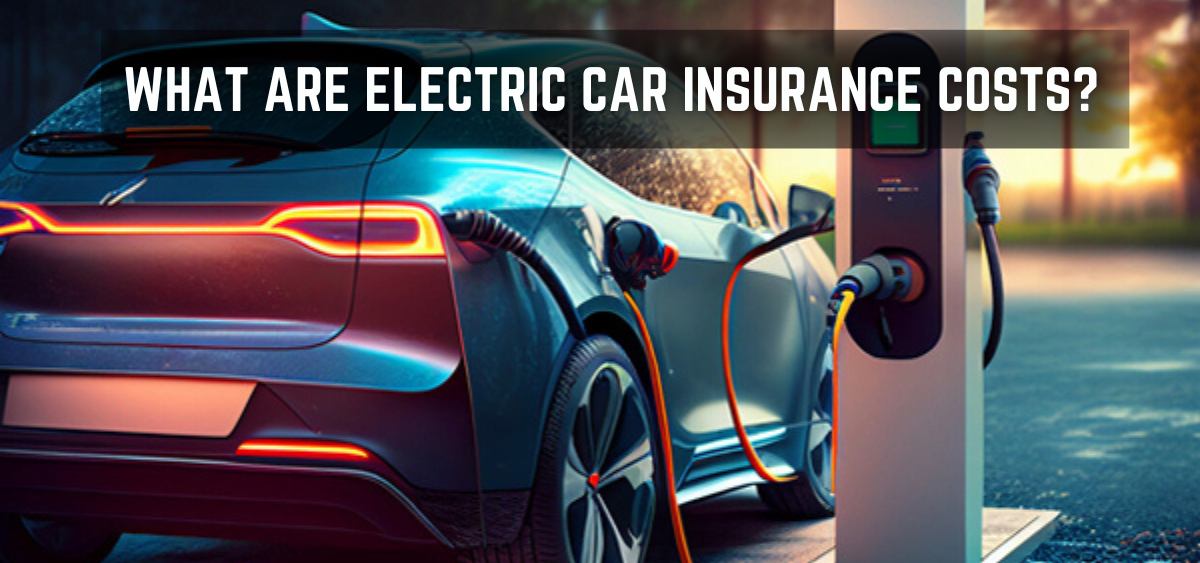

Electric Vehicle Insurance Cost: How to Save Money in 2026
Understanding EV insurance costs begins with one important distinction: third-party motor insurance premiums are regulated in India, while own-damage premiums are determined by individual insurers.
Therefore, the final cost of insuring an electric vehicle depends on its Insured Declared Value, repair costs, location, claim history, deductible, and selected add-ons—not simply on the fact that it runs on electricity.
For EV owners in 2026, the right question is not merely, “Which policy is cheapest?” It is, “Will this policy adequately protect the battery, electric motor, inverter, charger, and other expensive components?”
A low-cost policy can become expensive during a claim if it excludes battery consequential damage, water ingress, charger damage, or suitable EV roadside assistance.
Key Takeaways
- Third-party motor insurance is mandatory for registered electric vehicles in India.
- Comprehensive insurance is optional but generally advisable for new, valuable, or financed EVs.
- Third-party premiums for electric vehicles receive an approximately 15% concession under the notified tariff structure.
- Own-damage premiums are insurer-specific and depend on several vehicle and owner-related factors.
- There is no reliable rule that every EV costs 15%–30% more to insure than a petrol or diesel vehicle.
- Standard insurance may cover battery damage caused directly by an insured accident, fire, or natural disaster.
- Battery degradation, manufacturing defects, and gradual range reduction are normally warranty matters—not insurance claims.
- Battery protection, charger cover, roadside assistance, and zero-depreciation cover can be particularly useful for EV owners.
- Policy wording, cashless EV repair facilities, and claim conditions are more important than the lowest quoted premium.
What Has Changed Since the Original Article?
The original article correctly identified battery value, specialized repairs, no-claim bonus, and voluntary deductibles as important factors. However, several claims required updating.
First, electric vehicle insurance is no longer merely a conventional motor policy applied to an EV. Indian insurers increasingly provide EV-specific add-ons covering traction batteries, electric motors, chargers, charging cables, and consequential electrical damage.
However, these covers are not standardized. Their benefits, exclusions, claim limits, and vehicle-age restrictions vary across insurers.
Second, usage-based insurance has become more relevant. IRDAI’s general insurance framework encourages insurers to offer options such as:
- Pay as you drive
- Pay as you go
- Pay as you use
These policies can benefit owners who drive their electric cars mainly for short urban journeys or have low annual mileage.
Third, policyholder protection and claim transparency have improved. Insurers are expected to explain claim deductions and settlements transparently and support them with proper documentation.
Finally, generic statements suggesting that credit score, home charging, or public charger usage automatically determines premiums are not universally applicable in India. Insurers use their own underwriting models, so a live quotation remains the most reliable way to estimate the cost.
What Is EV Insurance?
EV insurance is a motor insurance policy issued for an electric car, scooter, motorcycle, three-wheeler, or commercial vehicle.
Its legal foundation is broadly the same as insurance for petrol or diesel vehicles. However, an electric vehicle contains specialized components that create different repair and claim risks.
These components may include:
- Traction battery pack
- Battery Management System
- Electric motor
- Power control unit
- Inverter
- Onboard charger
- Charging port
- High-voltage wiring
- Thermal management system
- Home wallbox or portable charger
Types of Electric Vehicle Insurance
| Insurance type | What it generally covers | Major limitation |
|---|---|---|
| Third-party insurance | Legal liability for third-party injury, death and property damage | Does not cover damage to your EV |
| Standalone own damage | Accidents, theft, fire and specified natural or man-made events affecting your vehicle | Does not include third-party liability |
| Comprehensive insurance | Third-party liability and own-vehicle damage | Exclusions and deductibles still apply |
| EV-specific add-ons | Battery, motor, charger, zero depreciation or roadside assistance | Covers only risks stated in the wording |
For a new private car, third-party coverage is commonly bundled for three years, while own-damage coverage is generally renewed annually.
For a new electric two-wheeler, third-party coverage is commonly bundled for five years. Buyers should inspect the policy schedule carefully because bundled plans can be confusing during renewal.
How Much Does It Cost to Insure an Electric Car in India?
There is no accurate nationwide average that applies to every electric vehicle.
The total premium can be understood through this basic formula:
Total premium = Third-party premium + Own-damage premium + Add-ons + Applicable taxes − Discounts
The own-damage premium is influenced by the following:
- Insured Declared Value
- Vehicle make and model
- Vehicle age
- Registration location
- Repair costs
- Claims history
- No Claim Bonus
- Deductibles
- Selected add-ons
- Insurer’s underwriting assessment
As a result, two owners of the same electric car may receive different quotations.
Electric Car Third-Party Insurance Rates
Under the notified Motor Vehicles Third-Party Insurance Base Premium and Liability Rules, the annual base rates for electric private cars are:
| Electric-car motor power | Annual base third-party premium* |
|---|---|
| Not exceeding 30 kW | ₹1,780 |
| Above 30 kW but not exceeding 65 kW | ₹2,904 |
| Above 65 kW | ₹6,712 |
Electric Two-Wheeler Third-Party Rates
| Electric two-wheeler motor power | Annual base third-party premium* |
|---|---|
| Not exceeding 3 kW | ₹457 |
| Above 3 kW but not exceeding 7 kW | ₹607 |
| Above 7 kW but not exceeding 16 kW | ₹1,161 |
| Above 16 kW | ₹2,383 |
*These are base premium figures. Applicable taxes, policy components, and new-vehicle long-term rates can change the final amount. Buyers should confirm current rates before purchasing or renewing a policy.
The tariff provides electric vehicles with an approximately 15% concession compared with corresponding conventional vehicle categories.
However, this concession applies to regulated third-party pricing. It does not guarantee that the complete comprehensive insurance policy will be 15% cheaper.
Is EV Car Insurance More Expensive?
EV insurance can be more expensive, but not in every case.
An electric vehicle with a high IDV, costly body panels, imported electrical components, or a limited repair network may attract a higher own-damage premium.
Conversely, insurers may price a popular mass-market EV competitively because it has:
- Strong manufacturer support
- Widely available spare parts
- Established repair procedures
- Advanced safety equipment
- Lower average annual usage
- Better model-level claim data
A meaningful comparison should involve electric and conventional vehicles with similar purchase prices, performance, body styles, IDVs, locations and coverage.
Comparing an expensive electric SUV with a low-cost petrol hatchback does not provide a fair picture.
What Factors Affect EV Insurance Costs?
1. Insured Declared Value
IDV represents the declared value of the vehicle for theft or total-loss settlement, subject to policy conditions.
A higher IDV generally creates a higher own-damage premium because the insurer has greater financial exposure.
Selecting an unrealistically low IDV may reduce the premium, but it could also reduce the settlement if the EV is stolen or declared a total loss.
2. Battery and High-Voltage Repair Costs
The traction battery is one of the most expensive EV components.
However, every battery-related accident does not require complete battery replacement. Depending on the manufacturer’s design and repair policy, it may be possible to replace the following:
- Individual battery modules
- Battery casing
- Cooling system components
- Sensors
- Contactors
- Supporting electronics
An EV with a modular, repairable battery design may eventually produce lower claim costs than a model that requires full-pack replacement after relatively limited damage.
3. Repair Network and Parts Availability
Electric vehicles require specialized tools and high-voltage safety procedures.
Technicians may need to isolate the battery, inspect the underbody, analyze diagnostic codes, and check for internal battery damage before repairs begin.
A model with locally available parts and several authorized EV service centers may be easier and faster to repair. Imported or low-volume vehicles can experience longer repair periods and higher logistics costs.
4. Vehicle Power and Performance
Third-party premium categories for electric vehicles use electric motor output measured in kilowatts.
For own-damage pricing, insurers may also consider the following:
- Vehicle performance
- Body style
- Safety equipment
- Spare-part prices
- Theft experience
- Historical claim severity
High power alone does not determine the premium, but it can form part of the broader underwriting assessment.
5. Registration Location
Insurance risk can vary by city and region because of differences in:
- Traffic density
- Accident frequency
- Theft experience
- Labour costs
- Flood exposure
- Spare-part availability
For Indian EV owners, monsoon flooding and urban waterlogging make battery water ingress conditions particularly important.
Home charging does not automatically earn a premium discount. However, charging equipment may need to be declared separately to receive protection.
6. Claim History and No Claim Bonus
NCB is normally applied to the own-damage portion of the premium—not to the third-party premium or the entire insurance invoice.
The usual NCB progression is:
| Consecutive claim-free period | NCB discount |
|---|---|
| One year | 20% |
| Two years | 25% |
| Three years | 35% |
| Four years | 45% |
| Five years | 50% |
An own-damage claim may reduce or remove the accumulated NCB at renewal unless the owner has purchased an NCB protection add-on.
7. Deductibles
A deductible is the amount the policyholder must pay before the insurer settles the remaining admissible claim.
Selecting a higher voluntary deductible can lower the annual premium. However, the amount should remain affordable. An excessively high deductible can make smaller claims financially impractical.
8. Add-on Covers
Add-ons increase the premium but can reduce out-of-pocket expenses after an accident, flood or charging-related incident.
The correct approach is to choose relevant covers based on the vehicle’s age, location, value and usage—not to purchase every option automatically.
9. Usage and Telematics
Low-mileage EV owners may benefit from pay-as-you-drive policies.
Before choosing one, check:
- Permitted annual kilometre slab
- Top-up charges
- Tracking requirements
- Premium adjustment conditions
- Consequences of exceeding the limit
- Whether all add-ons remain available
Does Comprehensive Insurance Cover the EV Battery?
A comprehensive policy may cover the battery when it is directly damaged by an insured event such as the following:
- Road accident
- Collision
- Fire
- Theft
- Vandalism
- Flood or another specified natural disaster
However, coverage becomes more complicated when the battery suffers consequential damage.
Consequential loss occurs when an initial event leads to a secondary problem—for example, water entering the battery enclosure and causing an internal short circuit.
Battery Coverage by Situation
| Battery-related situation | Likely insurance treatment |
|---|---|
| Battery damaged directly in an accident | May be covered under own damage |
| Water ingress after driving through a flooded road | May require battery protection |
| Damage caused by charging surge | Depends on policy wording or EV add-on |
| Battery theft or vandalism | Depends on comprehensive and add-on terms |
| Gradual range reduction | Generally excluded |
| Normal battery ageing | Generally excluded |
| Manufacturing defect | Usually handled under OEM warranty |
| Home charger damage | May require charger or accessories cover |
EV car insurance with battery cover is not a standardized insurance product. One insurer’s battery-protection add-on may differ significantly from another’s.
Check:
- Covered causes
- Consequential-damage provisions
- Water-ingress conditions
- Electrical-surge protection
- Depreciation deductions
- Claim limits
- Waiting periods
- Vehicle-age limits
- Battery inspection requirements
- Exclusions for unauthorised modifications
Insurance vs Battery Warranty
Insurance and battery warranties protect against different risks.
| EV insurance | Battery warranty |
|---|---|
| Covers specified accidental or external events | Covers specified manufacturing defects |
| May cover collision, fire, theft or flood | May cover abnormal battery failure |
| Requires an admissible insured event | Requires compliance with warranty conditions |
| Does not generally cover aging. | May include a capacity-retention threshold |
| Add-ons may cover consequential damage | Usually excludes accidental external damage |
An eight-year battery warranty does not eliminate the need for battery-related insurance protection. Similarly, battery insurance does not replace the manufacturer’s warranty.
Which EV Insurance Add-ons Are Worth Buying?
a) Battery Protection or EV Shield
This should receive priority for owners living in flood-prone locations or regularly driving through waterlogged urban roads.
Confirm whether the add-on covers:
- Traction battery
- Battery Management System
- Electric motor
- Inverter
- Power control unit
- Charging equipment
- Short circuits
- Water ingress
- Power surges
b) Zero-Depreciation Cover
Zero-depreciation cover reduces depreciation deductions on eligible replaced parts.
It can be especially useful for newer EVs containing expensive
- Plastic panels
- Metal body parts
- Composite materials
- Sensors
- Displays
- Electronic components
However, it does not remove deductibles, exclusions, or every consumable charge.
c) EV Roadside Assistance
Select an EV-aware roadside assistance plan with:
- Battery-depletion assistance
- Adequate towing distance
- Transport to an authorised EV workshop
- Suitable towing equipment
- Emergency charging support, where available
Flatbed towing is often preferred for EVs, but owners should follow the towing instructions given in the vehicle’s manual.
d) Charger and Charging-Cable Cover
Some policies offer protection for:
- Home wallbox
- Portable charger
- Charging cable
- Charging connector
- Related accessories
Check whether coverage applies only at the registered address or also while travelling. Theft, electrical surge, accidental damage and installation requirements may have separate conditions.
e) Return-to-Invoice Cover
Return-to-invoice cover can be useful during the first few years of ownership.
If the EV is stolen or declared a total loss, this add-on may reduce the gap between its IDV and original invoice value.
Check whether it includes:
- Registration charges
- Road tax
- Dealer accessories
- Policy-specified invoice components
f) Consumables, Tyre and NCB Protection
These covers are situational.
EVs still use coolant, brake fluid, fasteners, and other consumables, so it is inaccurate to say that consumables cover has no value for electric vehicles.
Tyre protection may help owners of heavy, high-torque EVs driven regularly on poor roads. NCB protection can benefit owners who want to preserve their renewal discount after an eligible claim.
Two-Wheeler Electric Vehicle Insurance
Electric scooters and motorcycles require the same fundamental decision as electric cars: liability-only insurance or comprehensive protection.
Comprehensive coverage is generally worth considering for a:
- New electric scooter
- High-value electric motorcycle
- Financed two-wheeler
- Vehicle with a costly removable battery
- Scooter parked in theft-prone areas
- Vehicle used regularly during monsoon conditions
Check whether the policy covers:
- Removable battery outside the scooter
- Charger and charging cable
- Battery theft
- Water ingress
- Electric motor and controller
- Digital display
- Roadside assistance for battery depletion
Do not automatically assume that every low-speed electric two-wheeler is exempt from registration and insurance. Its legal requirements depend on its approved motor power, speed, and vehicle category.
How to Choose the Best Insurance for EV Cars in India
There is no single best insurer for every electric vehicle. The best policy is the one that suits the specific EV, location, usage pattern, and financial risk.
Use this checklist when comparing ACKO EV car insurance or a policy from any other insurer:
- Keep the IDV identical across all quotations.
- Compare the same deductibles and add-ons.
- Confirm access to an authorized EV-capable cashless workshop.
- Ask who performs battery and high-voltage diagnostics.
- Check the definitions of battery, motor, inverter, and charger.
- Verify whether consequential battery damage is covered.
- Review roadside assistance and towing-distance limits.
- Inspect claim limits, co-payment, and depreciation conditions.
- Confirm the vehicle-age eligibility for every add-on.
- Transfer the correct NCB from the previous policy.
- Read the Customer Information Sheet and policy wording.
- Ensure every promised add-on appears in the final policy schedule.
A verbal assurance from a salesperson, dealer, or agent is not a substitute for written policy coverage.
How to Reduce EV Insurance Costs
1. Compare Equivalent Policies
Keep the IDV, deductible, and add-ons identical while comparing insurer, dealer, and marketplace quotations.
A cheaper quotation with lower IDV or fewer add-ons is not necessarily better value.
2. Protect Your No-Claim Bonus
Consider paying for a very small repair yourself when the cost is lower than the following:
- Policy deductible
- Expected claim amount
- Possible NCB loss
- Future premium impact
However, do not avoid reporting a serious accident merely to preserve NCB.
3. Consider Pay-as-You-Drive Insurance
Low-mileage urban EV owners should request usage-based insurance quotations. This can be particularly useful for a second car, a work-from-home household, or an EV used mainly for local journeys.
4. Choose a Sensible Deductible
Select a voluntary deductible that reduces the premium without creating financial difficulty during a claim.
5. Review the IDV every year.
Avoid both extremes:
- An excessively low IDV can weaken a theft or total-loss settlement.
- An unrealistically high IDV can increase the premium without guaranteeing an equivalent settlement.
6. Declare Chargers and Accessories
Ask whether your home charger and portable charging equipment should be covered under the following:
- Motor insurance
- Charger add-on
- Accessories cover
- Home insurance
Undeclared equipment can create claim disputes.
7. Maintain an Authorised Service Record
Preserve:
- Service invoices
- Battery diagnostic reports
- Software-update records
- Charger-installation documents
- Repair history
- Battery-health reports
These documents can help distinguish accidental damage from a manufacturing defect or maintenance issue.
8. Renew Before Expiry
A lapsed policy creates an uninsured period and may require vehicle inspection before own-damage coverage can be restored.
How Should EV Owners Handle Insurance Claims?
Following an accident, flood, or charging incident, turn off the vehicle if it is safe to do so and stay away from exposed high-voltage components.
Do not open, disconnect, or attempt to repair the battery pack yourself.
Notify the insurer promptly and document:
- Vehicle damage
- Water level
- Road or charging location
- Dashboard warning messages
- Charger and connector
- Surrounding conditions
- Dashcam recordings
- Charging-app history
Preserve towing receipts, service records, and workshop diagnostic reports.
Ask for transportation that complies with the manufacturer’s towing instructions and send the EV to a workshop authorized to assess high-voltage components.
If the claim is reduced or rejected, request the following:
- Relevant policy clause
- Surveyor’s findings
- Diagnostic evidence
- Itemised claim deductions
- Written reason for rejection
Use the insurer’s official grievance channel if the explanation is unsatisfactory.
Do Government Incentives Reduce EV Insurance Costs?
Government incentives such as PM E-DRIVE and state EV subsidies primarily support the purchase or deployment of eligible electric vehicles.
They do not ordinarily pay the owner’s annual insurance premium.
State road-tax and registration-fee exemptions can reduce an EV’s on-road cost, but these should not be described as direct insurance discounts.
The direct insurance-related advantage is the notified concession on the third-party premium for electric vehicles. Comprehensive insurance pricing remains insurer- and model-specific.
Expert Insight from Electric Vehicle Talks
India’s insurance industry is gradually moving from generic motor policies to component-aware EV coverage.
As insurers collect more model-level claim data, popular EVs with strong authorized service networks, locally available parts, and repairable battery architectures could receive more competitive pricing.
However, several factors will continue to influence claim severity:
- Urban flooding
- High-voltage battery diagnostics
- ADAS sensor calibration
- Imported electronic components
- Battery transport and storage
- Specialised towing
- Charging-equipment damage
For consumers, the biggest opportunity in 2026 is better policy comparison.
A policy that is ₹2,000 cheaper is not a genuine saving if it removes consequential battery-damage protection or lacks access to an EV-qualified workshop.
At the same time, purchasing every dealer-recommended add-on can waste money when coverage overlaps or does not match the owner’s risk.
The most practical strategy is to create a minimum coverage standard comprising:
- Realistic IDV
- Comprehensive own-damage protection
- Suitable battery wording
- EV-capable cashless workshop access
- Appropriate roadside assistance
- Relevant charger protection
Once these requirements are met, compare the final premiums.
People Also Ask
What is EV in insurance?
EV means electric vehicle. In motor insurance, it identifies a vehicle powered by an electric motor and traction battery and allows insurers to provide coverage suitable for battery, charging, and high-voltage risks.
Is EV insurance more expensive than petrol-car insurance?
Not always. The third-party premium for electric vehicles receives a concession, while own-damage pricing may be higher, similar, or lower depending on the vehicle, IDV, location, repair costs, and coverage.
How much does it cost to insure an electric car?
There is no universal figure. Obtain live quotations using the exact model, registration city, IDV, NCB, deductible, and required add-ons.
Is an EV battery covered by insurance?
Battery damage caused directly by an insured accident may be covered. Degradation, defects, and certain consequential losses may be excluded unless protected through specific policy wording or an add-on.
Is third-party insurance mandatory for electric scooters?
It is mandatory when the electric scooter is legally classified and registered as a motor vehicle. Very low-speed models may receive different regulatory treatment.
Can NCB be transferred from a petrol car to an EV?
Generally, yes. NCB belongs to the policyholder rather than the vehicle and can usually be transferred subject to the insurer’s documentation and timelines.
Frequently Asked Questions
Does insurance cover normal EV battery degradation?
No. Gradual capacity reduction, battery aging, and normal wear are generally excluded from motor insurance. Refer to the manufacturer’s battery warranty.
Do I need battery cover if my EV has an eight-year warranty?
Possibly. A warranty covers specified manufacturing defects or capacity conditions, while insurance protects against covered external events. The two forms of protection are different.
Does zero-depreciation coverage pay the complete battery bill?
Not automatically. The battery damage must first be admissible under the policy. Deductibles, exclusions, claim limits, and battery-specific conditions may still apply.
Can a home charger be included in EV insurance?
Some insurers offer charger or electrical-accessories coverage. Verify the sum insured, eligible location, theft conditions, surge protection, and installation requirements.
Should I purchase EV insurance from the dealership?
Dealer insurance can be convenient, but compare it with direct and marketplace quotations using identical IDVs, deductibles, add-ons, and workshop access.
What documents can support an EV insurance claim?
Useful documents include the policy schedule, registration certificate, driving license, incident photographs, charging records, towing invoice, service history, and workshop diagnostic report.
Conclusion
Understanding EV Insurance Costs in 2026 requires looking beyond the headline premium.
India’s regulated third-party structure provides an advantage to electric vehicles, but the real quality of a policy depends on its own-damage protection, IDV, battery wording, repair network, add-ons, and claim conditions.
As EV adoption and repair data expand, insurance pricing should become increasingly model-specific and competitive. Until then, buyers can protect their vehicle and budget by comparing equivalent quotations, selecting only relevant add-ons, and reviewing the policy every year.
Explore more EV news, buying guides, charging resources, technology updates, and ownership insights on Electric Vehicle Talks.
Disclaimer: Insurance premiums, coverage, taxes, add-on availability, and policy conditions vary by insurer, vehicle, and date. Read the Customer Information Sheet, prospectus, policy schedule, and complete wording before purchasing.