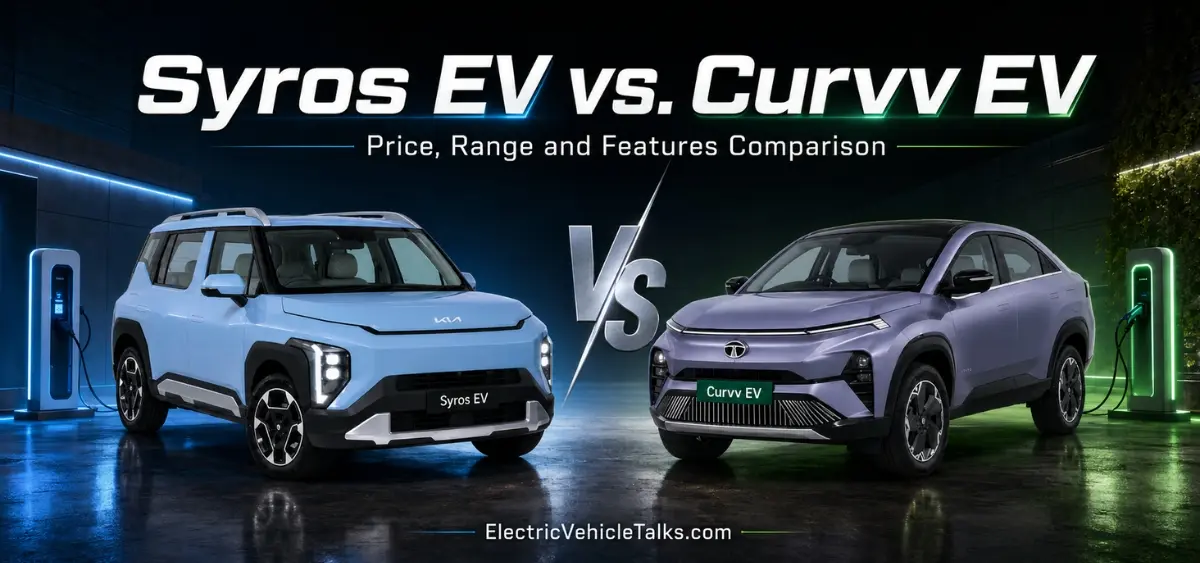

The Kia Syros EV X-Line ER is the better choice for buyers prioritizing cabin space, comfort, quicker acceleration, faster charging, and advanced convenience features. The Tata Curvv EV Empowered X 55 counters with a ₹1.19 lakh lower price, a larger battery, more boot space, a higher top speed, and stronger road presence. So, Syros EV vs. Curvv EV—which is better? For family-focused urban ownership, our analysis gives the narrow overall victory to the Syros EV. For style-conscious buyers seeking greater luggage capacity and stronger value, the Curvv EV remains extremely compelling.
This comparison focuses specifically on:
- Kia Syros EV X-Line ER 51.4 kWh with 7 kW charger
- Tata Curvv EV Empowered X 55 kWh with 7 kW charger
Prices may vary by city, insurance, registration, charger installation, colour and dealer-level charges. Kia currently lists the Syros EV X-Line ER at ₹19.99 lakh ex-showroom, while the ₹20.38 lakh figure used below represents the researched comparison price with the specified charger arrangement.

Syros EV vs. Curvv EV at a Glance (Syros EV X Line ER 51.4 kWh with 7 kW charger vs. Curvv EV X Series (Empowered X 55 kWh with 7 kW charger)
| Comparison area | Syros EV X-Line ER | Curvv EV Empowered X 55 |
|---|---|---|
| Price with 7 kW charger | ₹20.38 lakh | ₹19.19 lakh |
| Price advantage | — | ₹1.19 lakh |
| Battery pack | 51.4 kWh NMC | 55 kWh LFP |
| Motor output | 126 kW | 123 kW |
| Torque | 255 Nm | 215 Nm |
| 0–100 km/h | 8.1 seconds | 8.6 seconds |
| Approximate expected real-world range | Around 400 km | Around 400 km |
| Official certified range | Up to 526 km | 502 km |
| Maximum DC charging support | 100 kW | 70 kW |
| AC charging support | 3, 7 and 11 kW | 3 and 7 kW |
| Boot space | 465 litres | 500 litres |
| Frunk | 16 litres | 11.6 litres |
| Top speed | 120 km/h | 160 km/h |
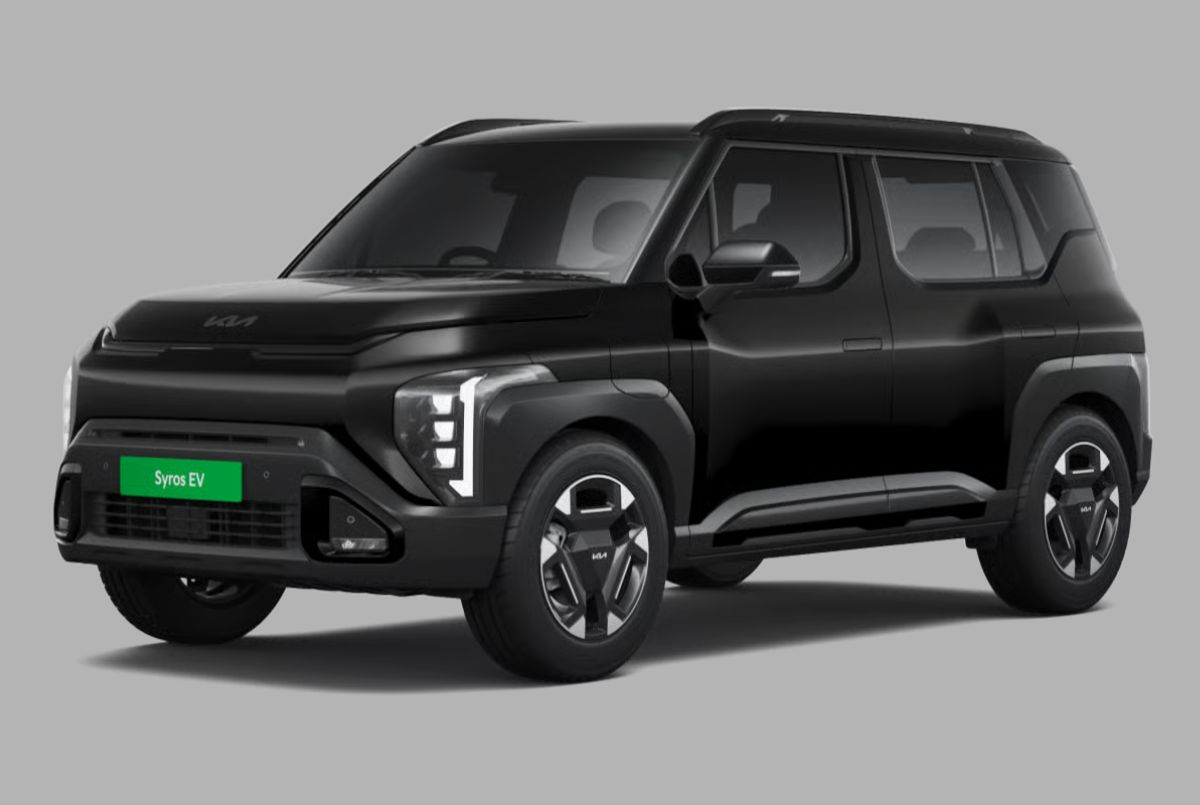
| Body style | Boxy compact electric SUV | Electric SUV-coupé |
Kia officially promotes a range of up to 526 km for the Syros EV, while Tata lists an ARAI-certified 502 km for the 55 kWh Curvv EV. The certified range should not be confused with everyday driving range, which changes with speed, traffic, temperature, terrain, and air-conditioning use.
Which EV Is More Affordable?
In this specific top-variant comparison, the Tata holds the clear price advantage.
| Variant | Price with charger |
|---|---|
| Syros EV X-Line ER 51.4 kWh | ₹20.38 lakh |
| Curvv EV Empowered X 55 kWh | ₹19.19 lakh |
| Difference | ₹1.19 lakh in Curvv EV’s favour |
The broader model ranges tell a different story. The Kia Syros EV range starts at approximately ₹13.50 lakh, while the Tata Curvv EV range starts at ₹16.99 lakh. Therefore, Kia offers the more accessible entry point, but the selected Curvv EV Empowered X 55 undercuts the selected Syros EV X-Line ER.
Kia officially lists the X-Line ER at ₹19.99 lakh before location-specific additions. Tata lists the Empowered X 55 at ₹19.19 lakh.
Price winner: Tata Curvv EV
The ₹1.19 lakh saving could cover a significant portion of insurance, home charger installation, accessories, or several years of electricity.
Syros EV vs. Curvv EV: Dimensions
The two vehicles approach space very differently. The Curvv EV is substantially longer, while the Syros EV uses its tall, boxy body to maximize passenger space.
| Dimension | Syros EV | Curvv EV | Difference |
|---|---|---|---|
| Length | 3,995 mm | 4,310 mm | Curvv is 315 mm longer |
| Width | 1,805 mm | 1,810 mm | Curvv is 5 mm wider |
| Height | 1,670 mm | 1,637 mm | Syros is 33 mm taller |
| Ground clearance | 187 mm | 186 mm | Syros is 1 mm higher |
| Wheelbase | 2,550 mm | 2,560 mm | Curvv is 10 mm longer |
| Rear-seat width | 1,320 mm | 1,270 mm | Syros offers 50 mm more |
| Rear seat-to-roof measurement | 914 mm | 914 mm | Equal |
| Turning radius | 5.1 metres | 5.35 metres | Syros is easier to turn |
Although the Curvv EV has the longer exterior, the Syros EV’s rear-seat width is 50 mm greater according to EVT’s physical measurements. This matters when three adults or two adults and a child seat need to share the second row.
Both vehicles recorded a rear seat-to-roof measurement of 914 mm, but the experience can still feel different. The Kia’s upright roofline and sliding rear seat create an airier environment. The Tata’s sloping coupé roof looks more dramatic from the outside.
Dimension winner
- Passenger packaging: Syros EV
- Road presence: Curvv EV
- Urban manoeuvrability: Syros EV
- Overall length and visual drama: Curvv EV
Which EV Has More Boot Space?
| Storage measurement | Syros EV | Curvv EV |
|---|---|---|
| Claimed boot capacity | 465 litres | 500 litres |
| Frunk capacity | 16 litres | 11.6 litres |
| Boot depth | 787/584 mm | 940 mm |
| Boot width | 1,066 mm | 990 mm |
| Boot height | 533 mm | 533 mm |
The Syros EV’s boot dimensions are 787/584 × 1,066 × 533 mm, while the Curvv EV measures 940 × 990 × 533 mm.
The Curvv EV wins on total boot volume and depth, making it more suitable for large suitcases. The Syros has a wider loading area and a larger frunk, which can be useful for storing charging cables away from luggage.
Storage winner: Tata Curvv EV
Battery, Range and Performance Compared
| Technical specification | Syros EV X-Line ER | Curvv EV Empowered X 55 |
|---|---|---|
| Battery capacity | 51.4 kWh | 55 kWh |
| Battery chemistry | NMC | LFP |
| Motor power | 126 kW | 123 kW |
| Torque | 255 Nm | 215 Nm |
| 0–100 km/h | 8.1 seconds | 8.6 seconds |
| Top speed | 120 km/h | 160 km/h |
| Wheels | 17-inch alloys | 18-inch alloys |
The Curvv EV has the larger battery, but battery size alone does not determine efficiency or usable range. Vehicle weight, aerodynamics, thermal management, tyres and software calibration are equally important.
NMC vs. LFP: What Does It Mean?
The Syros EV uses an NMC battery. NMC cells generally deliver high energy density, allowing more energy to be stored without excessive weight.
The Curvv EV uses an LFP battery, which is widely appreciated for thermal stability and long cycle life. LFP batteries can be charged to 100% more regularly, subject to the manufacturer’s instructions, although actual battery longevity still depends on heat exposure, charging patterns, and software-managed buffers.
Which EV Is Faster?
The Syros EV reaches 100 km/h in 8.1 seconds, compared with 8.6 seconds for the Curvv EV. Its additional 40 Nm should also produce a stronger low-speed response during overtaking and merging.
However, the Tata has a much higher claimed top speed of 160 km/h versus 120 km/h. That advantage is mostly academic on Indian roads, where acceleration, braking confidence, and mid-range response matter more than maximum speed.
Performance winner
- Acceleration and torque: Syros EV
- Top speed: Curvv EV
- Battery capacity: Curvv EV
- Battery chemistry: Depends on ownership priorities
Can Both Deliver 400 km in Real-World Driving?
Approximately 400 km per charge may be possible in both, but only under suitable conditions. EVT’s preliminary assessment suggests the Syros could potentially deliver more, possibly exceeding 450 km in an efficiency-focused test. That figure must be confirmed through a controlled range test.
Real-world range will be affected by:
- Expressway cruising speed
- Air-conditioning use
- Passenger and luggage load
- Elevation changes
- Outside temperature
- Tyre pressure
- Regenerative-braking settings
- Stop-and-go traffic
- Aggressive acceleration
A buyer should plan highway journeys using the usable 10–80% battery window rather than assuming access to the complete certified range.
For example, if an EV delivers 400 km from 100% to near-empty, the more practical 10–80% journey window is roughly 280 km before efficiency, weather, and reserve margins are considered.
Provisional range verdict: Too close to call
The Curvv has the larger pack, while the Syros has a higher official range and may prove more efficient. A same-day, same-route test is required for a definitive result.
Charging Speed: Which EV Saves More Time?
| Charging capability | Syros EV | Curvv EV |
|---|---|---|
| Maximum DC charging | 100 kW | 70 kW |
| AC support | 3, 7 and 11 kW | 3 and 7 kW |
| 7 kW home charging | Supported | Supported |
| 11 kW home charging | Supported | Not listed |
| Charging-speed display in console | Yes | — |
The Syros EV has the stronger charging hardware. It supports up to 100 kW DC charging and 11 kW AC charging, whereas the Curvv EV supports up to 70 kW DC and 7 kW AC in this comparison.
Kia claims a 10–80% DC charging time of approximately 39 minutes under suitable conditions. Actual speed depends on charger output, battery temperature, state of charge, and the vehicle’s charging curve—not merely its advertised peak.
Estimated Home-Charging Cost
Assuming an effective residential electricity price of ₹8 per unit:
| Vehicle | Battery capacity | Theoretical energy cost | Approximate cost with 10% loss |
|---|---|---|---|
| Syros EV | 51.4 kWh | ₹411 | ₹452 |
| Curvv EV | 55 kWh | ₹440 | ₹484 |
At an approximate 400 km of real-world range, energy expense may work out to around ₹1.13–₹1.21 per kilometre. Local tariffs, charging losses, and driving efficiency will change the result.
Tools such as the Pick My EV app can help owners estimate charging time for both models, but actual sessions should still be checked against the charger’s delivered power and the vehicle’s console.
Charging winner: Kia Syros EV
Features: Comfort Versus Style and Utility
Syros EV X-Line ER Additional Features
The Syros equipment highlights include the following:
- Double connected screens
- Premium interior
- Auto regen
- Single-pedal driving, called i-Pedal
- Auto-flush door handles
- Puddle lamps
- Additional height and boxy shape for better headroom
- Ventilated rear seats
- Sliding rear seats
- Nine colour options
- Charging-speed display in the console
- 11 kW home-charging and 100 kW DC-charging support
- 100W Type-C charger
- Retractable cup holders and ample storage
- Smart dashcam
- One-touch up and down operation for all windows
- Battery heating system
- Side parking sensors
Kia’s official material also highlights a 76.2 cm panoramic display arrangement, connected technology, OTA updates, and Level 2 ADAS on supported variants.
Curvv EV Empowered X 55 kWh Additional Features
The Curvv EV’s key advantages include the following:
- 500-litre boot
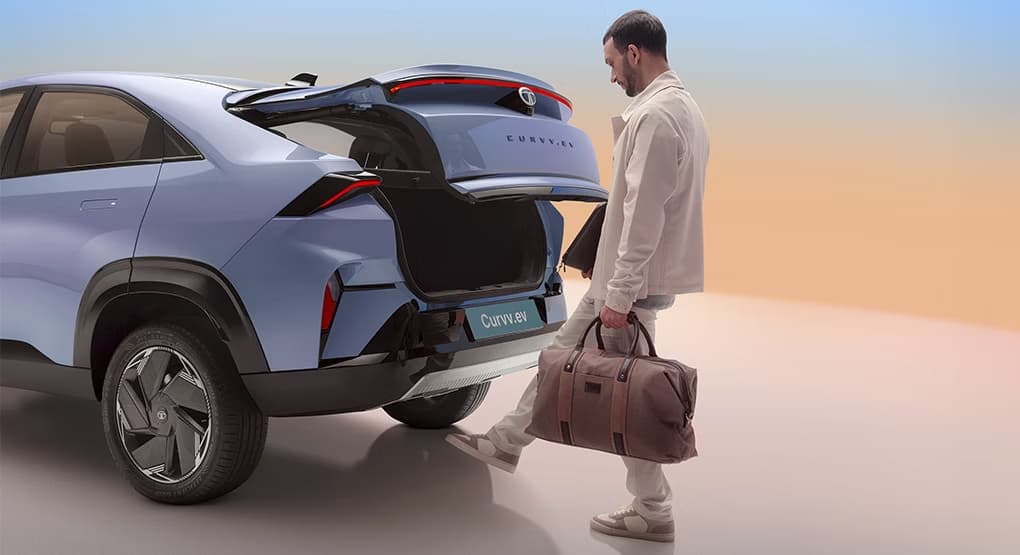
- Electronic tailgate
- Gesture control
- Six-way powered driver’s seat
- Six-way manually adjustable co-driver’s seat
- 18-inch alloy wheels
- Robust build and safety focus
- Greater length and road presence
- ₹1.19 lakh lower price
- Vehicle-to-vehicle charging support
Feature winner: Kia Syros EV
The Kia offers the more family-oriented comfort package. Sliding and ventilated rear seats, side parking sensors, fast Type-C charging, and better storage flexibility are features owners can appreciate every day.
The Tata’s powered tailgate, larger wheels, coupé silhouette, and V2V functionality will appeal to buyers who value visual impact and EV utility.
Ride, Suspension and Everyday Usability
A specification sheet cannot tell you how an EV behaves over a broken road, tall speed breaker, or sharply edged pothole.
The Syros EV’s 17-inch wheels should theoretically offer a useful balance of ride comfort and tyre sidewall. Its 5.1-meter turning radius also makes U-turns, basement ramps, and narrow lanes easier.
The Curvv EV’s 18-inch wheels enhance stance but may transmit more sharp-road impact depending on tire profile and suspension tuning. Its longer body and 5.35-meter turning radius require slightly more planning in confined spaces.
Before buying, conduct these practical checks:
- Load three adults into the second row.
- Ask a six-foot passenger to test knee and headroom.
- Drive over a regular speed hump at low speed.
- Test the suspension over patched and broken roads.
- Attempt a U-turn on a familiar road.
- Check under-thigh support in both rows.
- Perform a “brick test” or equivalent controlled clearance assessment only in a safe, private environment.
- Test boot access with your actual suitcases or baby stroller.
Safety, Warranty and Long-Term Ownership
| Warranty area | Syros EV | Curvv EV |
|---|---|---|
| High-voltage battery | 15 years, with conditions | 15 years |
| Motor | 3 years/unlimited km | 8 years/1.6 lakh km |
| Vehicle | 3 years/unlimited km | 3 years |
Both lifetime-style battery programs are subject to eligibility conditions, exclusions, and ownership requirements. Kia describes its coverage as a lifetime high-voltage battery warranty, while Tata offers lifetime battery coverage on eligible Curvv EV versions, subject to terms. Buyers should obtain the current warranty booklet and written dealer confirmation before paying a booking amount. Kia ownership information, Tata battery warranty
The Curvv’s longer motor coverage is a meaningful ownership advantage. Syros counters with a 3-year unlimited-kilometer vehicle and motor arrangement.
Warranty winner: Tata Curvv EV
Cost Analysis: Is the Curvv EV’s Saving Worth It?
The ₹1.19 lakh saving is significant. However, purchasing solely on ex-showroom price is a common mistake.
Include these factors in the calculation:
- Insurance premium and add-on battery cover
- Charger equipment and installation
- Cable length and civil work
- Electricity tariff
- Tyre replacement cost
- Annual service
- Extended warranty
- Finance interest
- Accessories
- Expected resale value
- Dealer and service center access
If the Syros EV’s faster charging, rear-seat comfort, and cabin flexibility solve everyday needs, the additional investment may be justified. If those features are not important, the Curvv EV delivers more battery capacity and boot space for less money.
Government Incentives and India Context
Electric vehicles and EV chargers attract 5% GST in India. Road-tax and registration benefits vary by state and may change, so the final on-road quotation must be checked locally.
Buyers should not assume that a private electric car automatically qualifies for a central purchase subsidy. PM E-DRIVE primarily targets segments such as electric two-wheelers, three-wheelers, buses, trucks, ambulances, and public charging infrastructure. State-level electric-car benefits remain location-specific. PM E-DRIVE details
Charging availability is improving rapidly. Government information reported 52,718 public charging stations by July 2026, including 16,561 fast-charging facilities. Nevertheless, home charging remains the most convenient and economical solution for most private EV owners.
Benefits and Challenges
Kia Syros EV benefits—Syros EV X Line ER 51.4 kWh with 7 kW charger
- Faster 100 kW DC charging
- 11 kW AC compatibility
- Stronger torque and acceleration
- Wider rear seating area
- Sliding and ventilated rear seats
- Smaller turning radius
- Premium, technology-rich cabin
Kia Syros EV challenges
- ₹1.19 lakh costlier in this comparison
- Smaller battery and boot
- Lower top speed
- Long-term real-world range requires independent validation
Tata Curvv EV benefits—Curvv EV x series (Empowered X 55 kWh with 7 kW charger)
- Lower selected-variant price
- Larger 55 kWh battery
- 500-litre boot
- Strong road presence
- 160 km/h top speed
- Powered tailgate and V2V support
- Longer motor warranty
Tata Curvv EV challenges
- Slower peak DC charging
- No 11 kW AC support in this comparison
- Less rear-seat width
- Larger turning radius
- Coupé styling may be less space-efficient than the Kia’s boxy form
Common Mistakes to Avoid
- Comparing only starting prices: The selected variants cost very different amounts from their respective base models.
- Treating certified range as guaranteed range: Driving conditions can reduce or occasionally improve the result.
- Ignoring charger installation: Apartment approvals, earthing, cable routing, and load upgrades can add cost.
- Buying based only on battery capacity: Efficiency and charging curves matter just as much.
- Skipping the rear-seat test: Families should test the vehicle with their regular passengers.
- Not checking insurance language: Confirm whether battery damage, charger equipment, and roadside assistance are included.
- Assuming every public charger delivers peak speed: A 100 kW-capable car will not receive 100 kW from a slower or shared charger.
Syros EV vs. Curvv EV Scorecard – Syros EV X Line ER 51.4 kWh with 7 kW charger vs. Curvv EV X Series (Empowered X 55 kWh with 7 kW charger)
| Category | Syros EV | Curvv EV | Winner |
|---|---|---|---|
| Price and value | 8/10 | 9/10 | Curvv EV |
| Passenger space | 9/10 | 8/10 | Syros EV |
| Boot and storage | 8.5/10 | 9/10 | Curvv EV |
| Performance | 9/10 | 8.5/10 | Syros EV |
| Range potential | 9/10 | 8.5/10 | Syros EV |
| Charging capability | 9.5/10 | 8/10 | Syros EV |
| Comfort and features | 9.5/10 | 8.5/10 | Syros EV |
| Road presence | 8.5/10 | 9.5/10 | Curvv EV |
| Urban usability | 9/10 | 8/10 | Syros EV |
| Warranty confidence | 8.5/10 | 9/10 | Curvv EV |
| Total | 89/100 | 86/100 | Syros EV |
Who Is the Winner?
Overall winner: Kia Syros EV X-Line ER
The Syros EV wins by a narrow margin because it better addresses the everyday realities of an Indian family EV: rear-seat comfort, easy maneuverability, stronger acceleration, 100 kW DC charging, 11 kW AC support, and a flexible cabin.
Value winner: Tata Curvv EV Empowered X 55
The Curvv EV remains the smarter value choice for buyers who want the following:
- A lower purchase price
- A larger battery
- More boot capacity
- Dramatic SUV-coupé styling
- Higher top speed
- Stronger visual presence
This is not a one-sided result. It is a choice between the Kia’s inside-out practicality and the Tata’s outside-in desirability and value.
For a deeper comparison between the Syros EV X Line ER 51.4 kWh with 7 kW charger vs. Curvv EV X Series (Empowered X 55 kWh) with 7 kW charger, see the table below
 |  | |
| Name | Tata Curvv EV SeriesX | KIA Syros EV |
| Model | Empowered X 55 KWh | X-Line ER 51.4 kWh |
| Year | 2026 | 2026 |
| Price | ₹19,19,000 | ₹19,99,900 |
Powertrain ⯆ | ||
| Battery Type | Lithium-ion | Lithium-Ion |
| Battery Pack | 55 KWh | 51.4 kWh |
| Electric Motor Type | PMSM Gen-2 motor | Permanent Magnet Synchronous Motor (PMSM) |
| Electric Motor Max Power (bhp@rpm/KW) | 123 KW | 171 PS (126 kW) |
| Electric Motor Max Torque (nm@rpm) | 215 Nm | 255 Nm |
| Drive Type | Front-Wheel Drive (FWD) | FWD |
| Number of Electric Motor | 1 | 1 |
| Dedicated Hybrid Engine | ||
| Engine Max. Power (kW@rpm) | ||
| Engine Max. Torque (Nm@rpm) | ||
| Fuel Tank capacity (L) | ||
| Fuel Type | ||
| Transmission | ||
Charging Info ⯆ | ||
| AC charging time (0-100% SoC) | Approx. 7.9 hrs with 7.2 kW AC fast charger | 4 hours 50 minutes with 11 kW AC Fast Charger |
| DC charging time (0-100% SoC) | ||
| Charging Port | CCS2 | Yes, Side Charging Port |
| Charging Options | 15A Socket, 7.2 kW AC Wall Box, DC Fast Charger | 11 kW Wall Box Charger, 7.4 kW Wall Box Charger, Portable Charging Cable, 100 kW DC Fast Charger |
| Charging Time (15/16 A Plug Point) | Approx. 21.0 hrs | |
| Wireless Mobile Charging | ||
| AC Portable Charger | Yes, 15A portable charger & charging cable | Yes (Portable Charging Cable) |
| Home Charger | 7.2 kW AC Wall Box | Yes, Supported (7.4 kW & 11 kW Wall Box Chargers) |
| Charging Limiter | Yes (Set Charge Limit via Kia Connect) | |
| Scheduled Charging & Scheduled Cabin Conditioning | ||
| AC charging time (0-80% SoC) | ||
| AC charging time (20-80% SoC) | Approx. 7.9 hrs with 7.2 kW AC fast charger | |
| DC charging time (20-80% SoC) | ||
| DC charging time (0-80% SoC) | ||
| Charger type / charging standard | CCS2 | CCS2 |
| DC charging time (10-80% SoC) | Approx. 40 minutes (70 kW+ charger) | 39 minutes using a 100 kW DC Fast Charger |
Warranty ⯆ | ||
| Battery Warranty | Lifetime warranty | Lifetime Warranty |
| Motor Warranty | Under the 15-year/1.6 lakh km | |
| Vehicle Warranty | 3 years / 1,25,000 km | 3 Years / Unlimited Kilometres, extendable up to 5 Years |
| Tyre Warranty | ||
| Home Charger Warranty | ||
| Portable Charger Warranty | ||
Learn More ⯆ | ||
| Read more | ||
| Watch Video | ||
Pricing ⯆ | ||
| Ex Showroom Price | 1919000 | 1999900 |
Comfort & Convenience ⯆ | ||
| Push Start | ||
| Frunk Space (litres) | 16 litres | |
| Boot Space (litres) | 500 L | |
| Auto Headlamps | ||
| Rain Sensing Wipers | ||
| 2nd row AC vents | ||
| Seat Belt Adjustment | ||
| Console Storage Cooling | ||
| Seat Recline | Yes, 2 Stage Rear Seat Recline | Rear Seats with Slide & Recline Function |
| Auto AC | Yes, Fully Automatic Air Conditioner with 5-inch Touchscreen Control | |
| Door Glass | Power Windows | All Door Power Windows with One-Touch Auto Up/Down |
| Power Adjusted Driver Seat | 6 Way Power Adjustable | Yes, 4-Way Power Driver Seat |
| Power Adjusted Co-Driver Seat | 6 Way Adjustable | |
| Electric adjust ORVM | ||
| Power fold ORVM | ||
| ORVM Auto Dip on Reverse | ||
| Auto Dimming IRVM | ||
| Ventilated Front Seats | ||
| Ventilated Rear Seats | ||
| Door Handles | Flush door handles | Auto Streamline Door Handles |
| Window Sun Shades | Rear Door Sunshade Curtains | |
| One Touch Driver Power Window | ||
| Parcel Shelf | ||
| Front Row Arm Rest with Storage | Yes, with cup holder | |
| 2nd Row Arm Rest with Cup Holder | ||
| Magzine Pockets for Rear Passengers | ||
| Bottle Holder | ||
| Umbrella Holder | ||
| Heads Up Display (augmented reality HUD) | ||
| 2nd Row Recline | Yes, 2 Stage | |
| Soft Wrapped Dashboard & Door Trims | Leatherette Wrapped Side Door Trims & Armrest; Metal Print Crash Pad Garnish | |
| Keep, Pet & Camp Modes (climate control) | ||
| Interior Device Charging Port | 100W USB-C (Front ×1), USB-C (Front ×2, Rear ×2), 12V Power Outlet | |
| Power Socket in Boot | ||
| ISOFIX Rear Seats | ||
| ESP | ||
| Door Open Alert (DOA) | ||
| Autonomous Emergency Steering (AES) | ||
| Evasive Steering Assist (ESA) | ||
| Emergency Lane Keep Assist | ||
| Highway Assist (including driver initiated auto lane change) | ||
| Rear Collision Warning (RCW) | ||
Technology ⯆ | ||
| Screen Size | 26.03 cm Cinematic Touchscreen Infotainment by HARMAN™ | 30-inch (76.20 cm) Trinity Panoramic Display comprising 12.3-inch HD Instrument Cluster + 12.3-inch HD Touchscreen Navigation + 5-inch HVAC Touchscreen |
| Chipset & Memory | ||
| Wireless Technology | Wireless Android Auto & Apple CarPlay, Wireless Phone Charger | |
| Connectivity | Wireless Android AutoTM and Apple CarPlayTM | Kia Connect 2.0, Bluetooth, Wireless Android Auto & Apple CarPlay, Smartwatch Connectivity, OTA Updates, Digital Key |
| Apps | My Kia App, K-Charge integration, Kia Connect App | |
| BYOD ( Bring your own Device) | ||
| Connected Features | Kia Connect 2.0 with 95+ Connected Car Features, Remote Control, Vehicle Management, Navigation, Schedule Charging, Remote Battery Conditioning, Find My Car, Digital Key, Live Traffic, Smartwatch Connectivity, OTA Updates | |
| Speakers | 4 Speakers + 4 Tweeters + Subwoofer | Harman Kardon Premium 8-Speaker Sound System |
| Dolby Atmos | ||
| Voice Commands | Yes, Multilingual | |
| NFC Key | ||
| Passive Keyless Entry (PKE) | ||
| Auto Park | ||
| Video calling with in-car camera | ||
| AIR Purifier | Yes, with AQI Display | |
| Internet Connectivity | ||
| Power Tailgate with Gesture Control | ||
| Tailgate Ajar Warning | ||
| Vechicle to Vehicle Charging | ||
| Vehicle to Load Charging | ||
| Heater | ||
| Follow Me Home Headlamps | Yes, Headlamp Escort Function | |
| Memory Function Seats | ||
| LightMeUp (ambient lights) | 64-Color Ambient Mood Lighting with 1st Row LED Footwell Lamps | |
| OTA Updates (infotainment & maps) | ||
| OTA Updates (vehicle features) | ||
| OTA Updates (ePowertrain) | ||
| Ecosense & Driving Analytics | ||
| App Store | ||
| Music & Calling Connectivity | ||
Safety ⯆ | ||
| Airbags | 6 airbags | 6 Airbags (Front, Side & Curtain) |
| Body Shell | ||
| Front Brake Type | Disc | Disc |
| Rear Brake Type | Disc | Disc |
| Brake Technology | i-VBAC, Electric Parking Brake with Auto Hold | ABS, Brake Assist System (BAS), Electronic Stability Control (ESC), Vehicle Stability Management (VSM), Electric Parking Brake with Auto Hold |
| EyeDentity (driver & occupant Monitoring) | ||
| EPB (electric park brake) | Yes, with Auto Hold | |
| Rear Parking Sensor | Yes (4 Sensors) | |
| Front Parking Sensor | Yes (4 Sensors) | |
| Radar | Yes, Used for ADAS functions | |
| Reverse Camera | ||
| Tyre Pressure Monitoring | ||
| Fog Lamps | Yes, Front | Yes, Front |
| Cornering Lamps | ||
| Auto Headlamps | ||
| Auto Booster Lamps | ||
| 360 Degree Camera | ||
| Blind Spot Monitor | ||
| Secure 360 - Live View & Recording | ||
| Rear Defogger | ||
| Windshield Auto Defogging | ||
| Central Locking | ||
| Child Safety Locks | ||
| Anti-lock Braking System (ABS) | ||
| Brake Assist | ||
| ADAS | Yes, Level 2 | Yes, Level 2 with 16 Autonomous Features |
| Forward Collision Warning System (FCW) | ||
| Automatic Emergency Braking System (AEB) | ||
| Lane Departure Warning System (LDW) | ||
| Lane Keep Assist System (LKA) | ||
| Lane Sway Alert (LSA) | ||
| Lane Centering Function (LCF) | ||
| Traffic Sign Recognition (TSR) | ||
| Front Vehicle Start Alert (FVSA) | ||
| Adaptive Cruise Control (ACC) | ||
| Intelligent Adaptive Cruise Control (iACC) | ||
| Smart Pilot Assist (SPA) | ||
| Risk Mitigation Support | ||
| High Beam Assist (HBA) | ||
| Forward Cross Traffic Alert (FCTA) | ||
| Rear Cross Traffic Alert (RCTA) | ||
| Find My Car | ||
| Geo-Fencing | ||
| Live Location Sharing & Tracking | ||
Design ⯆ | ||
| Driving Space | Spacious cabin with rear seat slide & recline function | |
| Illuminated Logo | ||
| Headlamps & DRL | LED Projector & LED | LED |
| Tail Lamps | LED, with animation | LED Combination with Center Tail Lamp |
| Upholstery | Plush Benecke-Kaliko Leatherette Seats | Onyx Black & Hunter Green Dual-Tone Leatherette Seats & Interiors with Hunter Green Accents |
| Wheels | R18 Alloy | 17-inch (43.66 cm) Crystal Cut Dual-Tone Aero Alloy Wheels |
| Spare Wheel | 125/80 D16 (16-inch) Compact Steel Spare Wheel | |
| Cladding | Body cladding in piano black finish | Premium body cladding with body-colour accents; Glossy Black Front & Rear Skid Plates; Side Door Garnish |
| Sunroof | Voice assisted Panoramic Sunroof with Mood lighting | Dual Pane Panoramic Sunroof |
| Steering Wheel | Leatherette Wrapped Steering Wheel | Double D-Cut Dual-Tone Leatherette Wrapped Steering Wheel |
| Cap Touch Switches | ||
| Steering Wheel & E-shifter | Smart Digital Shifter | Double D-Cut Steering Wheel with Shift-by-Wire (Column Type) |
| Mood Lighting | Multi Mood Ambient Lighting | 64-Color Ambient Mood Lighting (1st Row) |
| Night Trail - Carpet Lamps | LED Footwell Lamps (1st Row) | |
| Sequential Turn Indicators | ||
| Start Up / Good bye Animations | ||
| Center Tail Lamp with Animations | ||
| Integrated Antenna | Shark Fin Antenna with Integrated Spoiler | |
| Length (mm) | 4310 | 3,995 mm |
| Width (mm) | 1810 | 1,805 mm |
| Height (mm) | 1637 | 1,670 mm |
| Wheelbase (mm) | 2560 | 2,550 mm |
| Ground Clearance (mm) | 186 | |
| Vanity Mirror | ||
| Rear Reading Lamp | ||
| Rear Seat Headrest | Yes, ErgoWing Headrest | |
| Cup Holders | Retractable Front Cup Holders; Rear Centre Armrest with Cup Holders | |
| Digital Cluster | 12.3-inch (31.24 cm) HD Display Instrument Cluster | |
| Body Type | SUV | SUV |
| Seating Capacity | 5 | 5 |
| No. of Doors | 5 | 5 |
| Rear Spoiler | Yes, in gloss piano black | Yes, Integrated Spoiler |
| Electrically Deployed Front Door Handles | Flush door handles | Auto Streamline Door Handles |
| Premium Finish Exterior Cladding | ||
| Rear Seating Dimensions L× W (inch.) | ||
| Front Seating Dimensions L× W (inch.) | ||
Performance ⯆ | ||
| Steering Type & Column | Electrically power assisted | Electric Power Steering with Tilt Adjust; Shift-by-Wire (SBW) |
| Steering Adjustment | Tilt Adjustment | Tilt Adjust |
| Turning Radius (Metres) | 5.35 m | |
| Drive Modes | Multi drive mode - City, Sport & Eco | Eco / Normal / Sport |
| Regenerative Braking Levels | 4 Levels (Level 0 - 1 - 2 - 3 ) 0 - No regen I 3 - Max. regen | Yes, with Paddle Shifters for i-Pedal & Regen Braking |
| Single Pedal Drive | Yes (i-Pedal) | |
| Virtual Engine Sound | ||
| Front Suspension | Independent MacPherson strut with coil spring | McPherson Strut with Coil Spring |
| Rear Suspension | Twist beam with dual path strut | Coupled Torsion Beam Axle (CTBA) with Coil Spring |
| Suspension Damper Type | ||
| Shock Absorbers Type | ||
| Technology | ||
| Road Vibrations | ||
| Tyre Type & Size | 215/55 R18 | 215/55 R17 (43.66 cm / 17-inch) |
| Cruise Control | ||
| Boost Mode | ||
| Performance Dashboard | 31.24 cm (12.3-inch) HD Display Instrument Cluster | |
| 1-100 Km Acceleration (Sec) | 8.6 sec | |
| Top Speed | 160 km/h | |
| Real World Range | 400 - 425 km | |
| ARAI Range | 502 km | 526 km |
| Combined ARAI Range | ||
| Real World Combined Range | ||
Sources: All the specifications are from the official page.
Expert Insight from Electric Vehicle Talks
The most important difference is not the 3.6 kWh battery gap or the five-millimeter difference in width. It is how each manufacturer has interpreted the electric family SUV.
Kia has treated electrification as an opportunity to make a compact vehicle feel unusually spacious and technologically complete. Tata has used it to produce an aspirational coupé-SUV with a larger footprint, a useful boot, and a competitive price.
Our recommendation is simple:
- Choose the Syros EV for rear-seat use, city driving, charging flexibility, and everyday comfort.
- Choose the Curvv EV for styling, luggage capacity, value, and stronger highway presence.
- Wait for a controlled, same-route range test if maximum driving distance is your deciding factor.
People Also Ask
1. Syros EV vs. Curvv EV—which is better?
The Syros EV is better for family comfort, acceleration, urban maneuverability, and faster charging. The Curvv EV is better for price, boot capacity, road presence, and top speed.
2. Which has more range, the Syros EV or the Curvv EV?
Kia claims up to 526 km for the Syros EV, while Tata lists 502 km for the Curvv EV 55. Both may deliver approximately 400 km in mixed real-world conditions, depending on driving style and climate.
3. Which EV has the larger battery?
The Tata Curvv EV has a 55 kWh battery, compared with the Syros EV X-Line ER’s 51.4 kWh battery.
4. Which electric SUV charges faster?
The Syros EV supports up to 100 kW DC charging and 11 kW AC charging. The Curvv EV supports up to 70 kW DC and 7 kW AC in this comparison.
5. Is the Syros EV more spacious than the Curvv EV?
The Syros is shorter externally but has a boxier, taller body and 50 mm more rear-seat width. The Curvv is longer and offers a larger boot.
6. Which EV is better for highway use?
The Curvv EV offers a higher top speed, a larger battery, and strong road presence. The Syros EV offers faster DC charging and stronger torque. The better choice depends on whether cruising performance or charging convenience matters more.
7. Which EV is better for three rear passengers?
The Syros EV is likely the better option because its researched rear-seat width is 1,320 mm, compared with 1,270 mm in the Curvv EV. Buyers should still perform an in-person three-passenger test.
Syros EV vs. Curvv EV: FAQs
Is the Curvv EV cheaper than the Syros EV X-Line ER?
Yes. In this selected comparison, the Curvv EV Empowered X 55 with a 7 kW charger costs ₹19.19 lakh, while the Syros EV X-Line ER configuration is ₹20.38 lakh—a difference of ₹1.19 lakh.
Which has the bigger boot?
The Curvv EV has a 500-liter boot, while the Syros EV offers 465 liters. The Syros has the larger frunk at 16 liters.
Does the Syros EV support one-pedal driving?
Yes. It offers i-Pedal functionality, which allows the driver to accelerate and slow the vehicle primarily through the accelerator pedal while maximizing regenerative braking.
Can I charge both EVs at home?
Yes. Both support 7 kW AC charging. The Syros EV additionally supports 11 kW AC charging, provided the charger and electrical connection are compatible.
Which battery chemistry is better: NMC or LFP?
Neither is universally better. NMC generally offers greater energy density, while LFP is known for thermal stability and cycle durability. Battery design, cooling, and software management are equally important.
How much does a full home charge cost?
At ₹8 per unit and allowing approximately 10% charging loss, a full charge may cost around ₹452 for the Syros EV and ₹484 for the Curvv EV. Local electricity rates will change these estimates.
Should I buy an EV without dedicated parking?
It is possible, but less convenient. Before buying, confirm reliable overnight charging at home, work, or a nearby station. Depending entirely on public fast charging can increase cost and inconvenience.
Conclusion
The Syros EV vs. Curvv EV contest shows how quickly India’s electric SUV market is evolving. Buyers no longer need to choose merely between price and range; they can now compare charging speeds, rear-seat ventilation, battery chemistry, connected technology, vehicle-to-vehicle power sharing, and sophisticated cabin packaging.
The Kia Syros EV X-Line ER wins the overall scorecard with 89/100, thanks to its family-friendly interior, faster charging, and stronger everyday performance. The Tata Curvv EV Empowered X 55 scores 86/100 and wins on value, boot space, design presence, and selected warranty advantages.
Neither is a poor choice. Test both with your regular passengers, compare final on-road quotations, and confirm home charger installation before deciding.
For more independent EV comparisons, ownership advice, charging guides, and sustainable-mobility insights, explore Electric Vehicle Talks.

Related Article:-