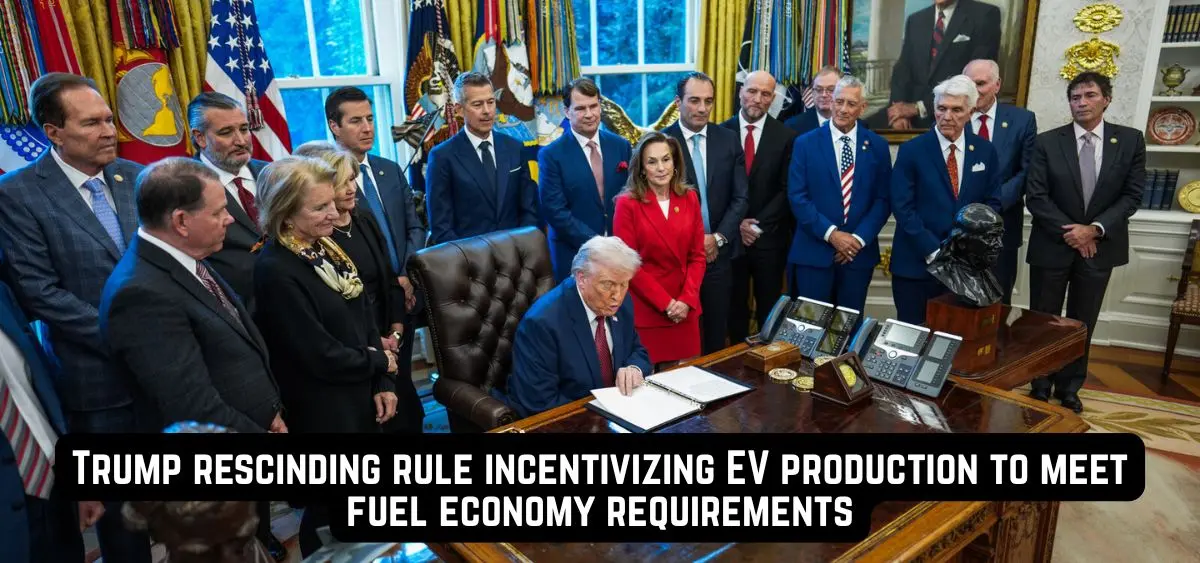

On February 18, 2026, a major shift in U.S. auto policy sent shockwaves through the industry. The Trump rescinding rule incentivizing EV production has sparked intense debate among automakers, environmentalists, and consumers alike. The decision overturns a long-standing Department of Energy provision that critics claimed overstated the fuel-economy benefits of electric vehicles in federal calculations.
Supporters call it a correction of regulatory overreach, while opponents warn it could slow America’s electric transition. What does this move really mean for car prices, fuel standards, and the future of EV innovation? Let’s break down the facts behind the headline.
The End of the “Fuel Content Factor”
At the center of the rollback is the “fuel content factor,” a multiplier introduced in 2000. This rule allowed automakers to assign unrealistically high fuel-economy values to EVs when calculating compliance with Corporate Average Fuel Economy (CAFE) standards. By overstating energy savings, manufacturers could offset lower efficiency in their gasoline-powered fleets with relatively small EV sales.
With Trump rescinding the rule that incentivized EV production, the DOE has removed this factor from CAFE calculations, calling it unlawful and beyond congressional intent. The administration stated that the change follows a September appeals court decision questioning the provision’s legality.
Lower Fuel Economy Targets and Penalty Changes
The policy shift goes beyond a single calculation method. The National Highway Traffic Safety Administration (NHTSA) has proposed resetting CAFE standards, reducing fleetwide targets from nearly 50 miles per gallon under previous goals to 34.5 mpg by 2031.
Additionally, the Working Families Tax Cut Act, signed in July 2025, effectively eliminated civil penalties for CAFE noncompliance, setting them to $0 retroactive to the 2022 model year. New proposals may also exclude EVs entirely from CAFE averages, focusing compliance strictly on internal combustion engine efficiency.
Broader EV Policy Rollbacks
The move is part of a broader regulatory shift. The Environmental Protection Agency revoked the 2009 “Endangerment Finding,” which had formed the legal basis for federal vehicle emissions rules. Federal EV consumer tax credits ended in September 2025, and California’s authority to set stricter emission standards is also under review.
Environmental groups have filed legal challenges, arguing that Trump’s rescission of the rule incentivizing EV production could increase fuel costs and weaken America’s competitiveness in the global EV race.
As the debate intensifies, Trump rescinding rule incentivizing EV production marks a pivotal turning point in U.S. automotive and climate policy.

Related Articles:-