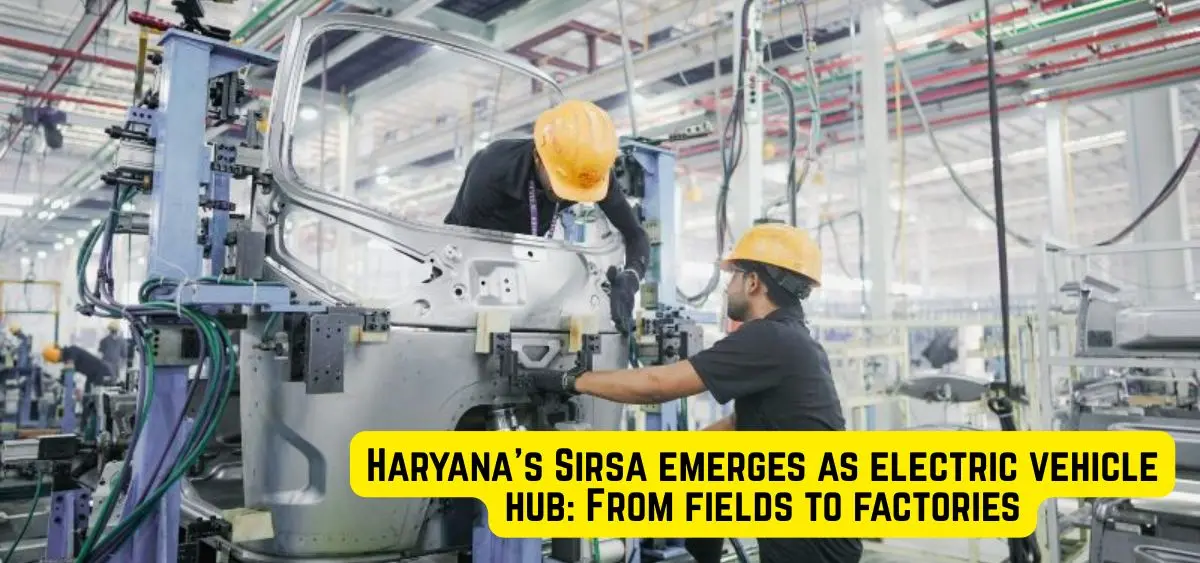

Traditionally known for its vast wheat and cotton fields, Sirsa in Haryana is undergoing a powerful industrial transformation. Once identified primarily as an agriculture-driven district, today Haryana’s Sirsa emerges as an electric vehicle hub, carving a strong identity in India’s rapidly expanding EV ecosystem.
The Early Struggles and Rising Demand
When electric vehicles first entered the market, consumer awareness was low. Buyers were hesitant and unsure about reliability. Industry leaders recall that people took time to trust EV technology. However, as fuel prices increased and environmental concerns gained attention, customers gradually recognized the savings on fuel and long-term benefits.
This shift in mindset played a crucial role in the rise of local manufacturers. Companies focused on educating customers, offering affordable pricing, and ensuring strong after-sales service to build trust.

Pioneer Companies Driving Growth
One of the early movers, Yakuza EV, founded in 2017, has become a key contributor to the region’s growth. The company now produces around 600 units daily and operates not only in Sirsa but also in Kolkata, Gwalior, and Salem (Tamil Nadu). With over 1,300 dealers nationwide and exports to Nepal and Bangladesh, the brand is expanding rapidly. It also plans to establish a new 16.5-acre plant near Sirsa, further strengthening local manufacturing.
Alongside Yakuza EV, other players such as NK E-Bikes, Elesco, and Maa Luxmi E-Vehicles have contributed to the district’s industrial rise. Within a 150-km radius, more than 50 EV production and assembly units now operate, supplying electric two-wheelers across India and generating thousands of jobs.
Local Supply Chain and Competitive Strategy
A major factor behind this transformation is the development of a localized supply chain. Many EV components are now manufactured in Sirsa, reducing dependency on imports and lowering costs. While some parts are still sourced from outside India, the push for localization continues to grow.
In an increasingly competitive EV market, manufacturers emphasize understanding customer needs. Affordable pricing, improved battery backup, modern designs, and quick complaint resolution have helped Sirsa-based companies stay competitive against major national brands.
Policy Support and Future Potential
The rise of the EV industry aligns with the Haryana Electric Vehicle Policy 2022. The policy offers capital subsidies up to 25% for micro industries and 20% for small and medium enterprises, 100% stamp duty reimbursement, 20 years of electricity duty exemption, and employment subsidies of ₹48,000 per employee annually for hiring residents.
Additionally, the state plans to develop 10 new Industrial Model Townships and convert 100% of its transport bus fleet to electric or non-fossil fuel technology by 2030.
Despite challenges like higher logistics costs due to its distance from Delhi (around 250 km) and limited industrial categorization support, local leaders believe that with stronger government backing, the district can unlock even greater potential.
As innovation replaces tradition, Haryana’s Sirsa emerges as an electric vehicle hub, reflecting how smaller towns are shaping India’s industrial future. The journey from farms to factories symbolizes ambition, resilience, and a new economic chapter for the region.
Related Articles:-