The buzz around BYD’s 25-Year EV Battery has taken social media and auto forums by storm. But what does this bold claim really mean? To understand the hype, it’s important to separate theoretical lifespan, real-world usage, and official warranty coverage.
Theoretical vs. Real-World Lifespan
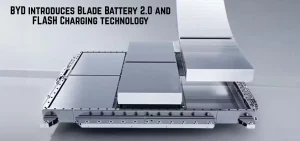
At the heart of the discussion is BYD’s Blade Battery, based on Lithium Iron Phosphate (LFP) chemistry. It is engineered to handle 3,000 to 5,000 charge cycles, which can translate to nearly 1.2 million kilometres (around 750,000 miles) before significant degradation. For an average driver, this could mean 20 to 30 years of use under normal driving conditions.
Adding to the excitement, reports in early 2026 highlighted BYD’s roadmap for sodium-ion batteries. These next-generation cells are said to support up to 10,000 charge cycles, potentially enabling a vehicle to run for over 20–25 years even with daily charging. This development has fueled discussions about BYD’s 25-Year EV Battery becoming a realistic long-term mobility solution.

What About the Warranty?
Despite the impressive technical potential, official warranties tell a more conservative story. Most BYD passenger EVs come with an 8-year or 150,000 km battery warranty globally. In select European markets, this has been extended to 8 years or 250,000 km to enhance customer confidence.
The widely circulated “25-year warranty” often applies to stationary energy storage systems, such as home backup or grid storage projects—not passenger vehicles. While BYD’s 25-Year EV Battery reflects technological capability, its warranty coverage remains aligned with industry standards.
Why the Blade Battery Stands Out?
The Blade Battery’s reputation comes from three key strengths:
- Exceptional Safety: It passes the nail penetration test without fire or smoke.
- Structural Strength: Acts as part of the vehicle’s structure, boosting rigidity by 50%.
- Space Efficiency: Uses up to 50% less volume than traditional block-style LFP batteries.
In short, BYD’s 25-Year EV Battery narrative represents a blend of advanced chemistry, long cycle life, and evolving technology—reshaping expectations for EV durability worldwide.
Related Articles:-