

Rising Costs Push Strategic Shift
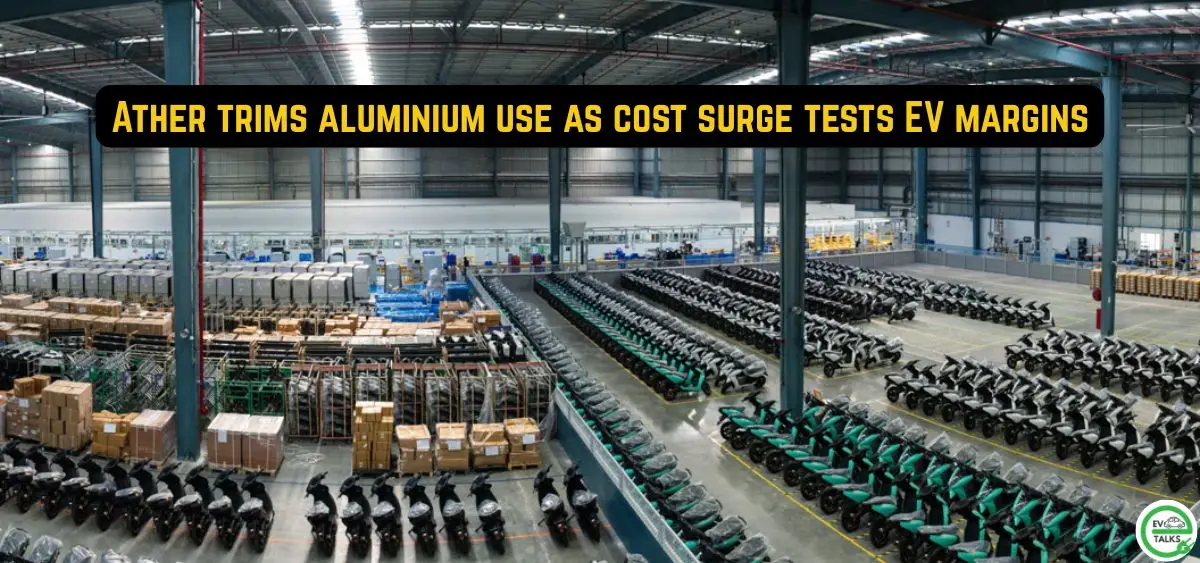
Ather Energy is reworking its engineering strategy as soaring raw material prices threaten profitability across the electric vehicle (EV) sector. The move comes amid a global aluminum shortage that intensified after April 7, 2026, worsened by supply chain disruptions linked to the Strait of Hormuz closure. Domestic aluminium prices have surged sharply, while global rates touched a four-year high of USD 3,600 per tonne on the London Metal Exchange. Against this backdrop, Ather trims aluminium use to shield its margins and maintain competitiveness in a price-sensitive market like India.

Engineering a Cost-Efficient Future
Known for its premium aluminium-heavy scooter frames, the company is now exploring alternative materials. Engineers are evaluating high-strength alloys and composite materials for non-critical components. At the same time, Ather is increasing its reliance on recycled aluminium, which reduces both production costs and environmental impact.
A key initiative under its upcoming EL platform involves a “production optimisation” cycle. This includes redesigning chassis structures to achieve a 10–15% reduction in aluminium usage per vehicle. Through these steps, Ather trims aluminium use while preserving performance and durability standards.
Financial Pressure Despite Strong Growth
Although Ather reported strong sales in March 2026, rising input costs—including aluminium, copper, and other metals—are putting pressure on margins. Aluminium prices alone have risen about 14%, from INR 315/kg in FY25 to approximately INR 358/kg in FY26.
The company has shown financial improvement, with EBITDA margins rising by 1,300 basis points in FY25 and a target of 1,400 basis points in FY26. Revenue growth remains robust, with a 50% year-on-year increase and projections to exceed INR 1,000 crore per quarter in FY26. Still, Ather trims aluminium use as a necessary step to sustain these gains.
Balancing Prices and Consumer Sensitivity
According to CEO Tarun Mehta, while battery costs remain relatively stable, vehicle component costs are unpredictable. The company has implemented modest price increases for select 450-series models but acknowledges it cannot fully pass on a 10–12% cost rise to customers.
Instead, Ather is focusing on operational efficiency. Plans include expanding its retail footprint to 700 stores, allowing it to spread fixed costs over higher sales volumes.
Positioning Ahead of IPO
As the company prepares for its anticipated 2026 IPO, cost optimisation has become a critical priority. It has already dematerialised its securities, meeting a key regulatory requirement for going public.
With a growing market share of 18.7%, driven by strong demand for its family-oriented Rizta scooter, Ather trims aluminium use as part of a broader strategy to de-risk operations, enhance sustainability, and strengthen its market position in India’s rapidly evolving EV landscape.

Related Articles:









