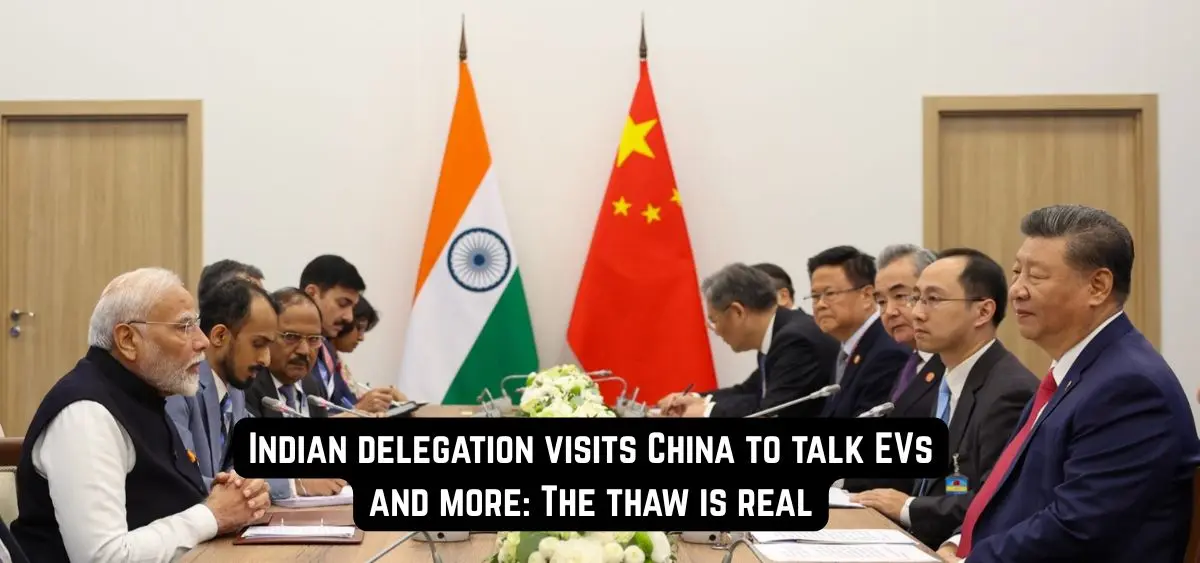

In a development described by diplomats as a “real thaw” in bilateral relations, an Indian delegation visits China to talk EVs and explore critical partnerships across electric mobility and clean energy. The high-level business mission, conducted from March 29 to April 4, 2026, marks the first such visit in more than five years, reigniting economic engagement stalled since the 2020 border tensions.
A Strategic Visit After Years of Freeze
Led by the PHD Chamber of Commerce and Industry (PHDCCI), the delegation featured eight Indian companies—six of them startups—working in EV charging, battery storage, electric trucks, and energy trading. Their travel itinerary covered Shanghai, Zhejiang, and Jiangsu, where they held meetings with leading Chinese firms and financial institutions, including HSBC and the Wuxi Technology Development Corporation.
This visit comes at a time when the Indian delegation visits China to talk EVs, as India urgently seeks solutions to energy security risks intensified by the ongoing Iran conflict.
Focus Areas: EVs, Batteries & Renewable Energy
The discussions centered around three core sectors:
1. EV Charging Infrastructure
India’s target of 30% EV sales by 2030 is challenged by slow charger deployment. Chinese companies showcased advanced public-charging technologies that could fill crucial gaps.
2. Battery Technology & Joint Ventures
Indian companies explored joint ventures and technology-transfer partnerships, focusing on battery manufacturing and supply-chain integration within India—rather than investing heavily in China.
3. Solar & Clean-Energy Manufacturing
The delegation assessed opportunities in solar panel innovation, energy storage, and renewable manufacturing solutions.
Economic pressures—especially the surge in fuel costs and supply-chain vulnerabilities from Middle East disruptions—have accelerated India’s urgency to adopt green energy systems.
Business Impact: Faster Timelines, New Opportunities
Early benefits are already visible. Gurugram-based e-Zero Mobility reportedly cut 16 weeks from its development cycle after gaining direct access to Chinese engineering components during the visit.
Industry experts say the Indian delegation’s visit to China to talk EVs is at a critical moment, especially as India adopts a more liberal stance toward foreign investments. On March 11, New Delhi eased specific restrictions on Chinese investments that had been imposed since the 2020 Galwan Valley clash.
A Step Toward Normalization
Chinese Embassy spokesperson Yu Jing publicly welcomed the engagement, noting that the “thaw is real.” Analysts, however, describe the progress as cautious but positive, reflecting mutual interest without dramatic shifts.
PHDCCI confirmed plans for a larger follow-up delegation at the upcoming Canton Autumn Fair later this year—another indicator that Indian delegation visits to China to talk EVs could become a recurring chapter in renewed India-China economic cooperation.

Related Articles: