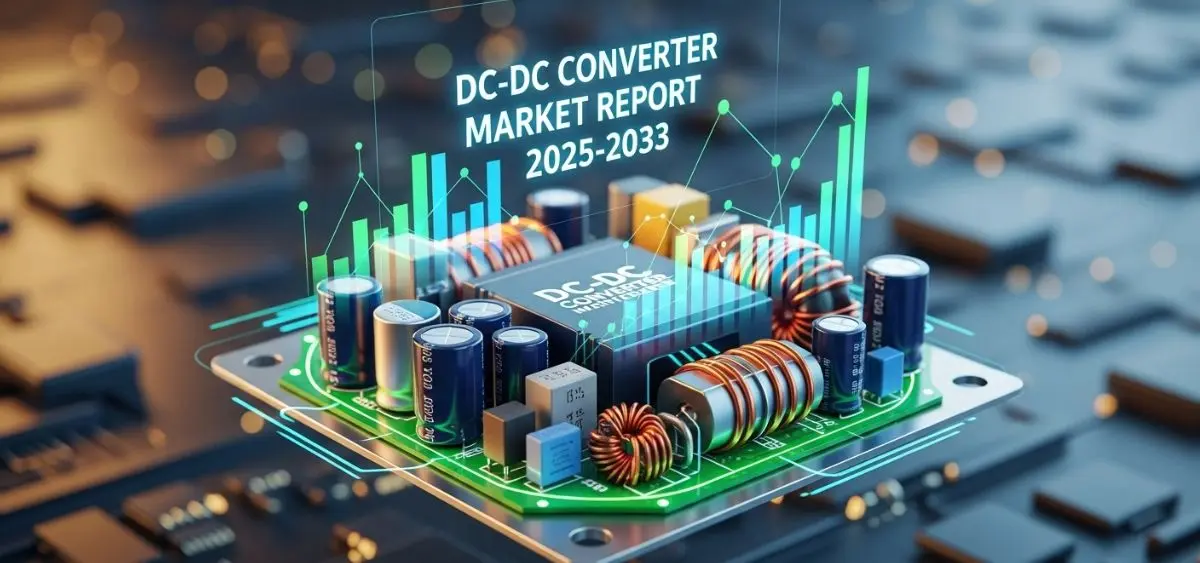

The global EV DC-DC Converter Market to Reach US$ 10.2 Billion by 2031 is gaining strong momentum as electric vehicle adoption accelerates worldwide. Valued at approximately US$ 4.9 billion in 2024, the market is projected to grow significantly at a CAGR of 10.2% from 2024 to 2031. This growth highlights the increasing importance of power electronics components that support the efficient functioning of modern electric vehicles.
What is a DC-DC Converter in Electric Vehicles?
A DC-DC converter is a crucial component in electric vehicle power systems. It converts the high-voltage energy stored in EV batteries into lower-voltage power required for essential vehicle electronics and auxiliary systems.
These systems include infotainment units, lighting, safety electronics, and multiple onboard controllers. As EV technology becomes more sophisticated, the demand for reliable voltage conversion increases. Because every electric vehicle requires this technology, the EV DC-DC Converter Market to Reach US$ 10.2 Billion represents a foundational part of the EV ecosystem.

Key Drivers Accelerating Market Growth
Rising Global EV Adoption
Government incentives, stricter environmental regulations, and growing consumer awareness are pushing the adoption of electric vehicles worldwide. As more EVs enter the market, demand for power electronics like DC-DC converters continues to grow.
Increasing Electronic Complexity
Modern vehicles now include multiple Electronic Control Units (ECUs) for advanced driver assistance systems (ADAS), infotainment, connectivity, and safety features. These components require stable low-voltage power, further boosting the EV DC-DC Converter Market to Reach US$ 10.2 Billion.
Transition to Advanced EV Architectures
Automakers are shifting toward 800V EV platforms to support faster charging and improved efficiency. This transition requires advanced DC-DC converters capable of handling higher voltages and improving power management across vehicle systems.
Emergence of Bidirectional Power Systems
Another important trend is the development of bidirectional DC-DC converters, which enable technologies such as vehicle-to-grid (V2G) and vehicle-to-home (V2H). These systems allow EV batteries to supply power back to homes or the electrical grid, opening new opportunities for energy management.
Major Market Segments
Topology Type: Isolated DC-DC converters dominate the market due to their enhanced safety, electrical isolation, and reliability in high-voltage EV architectures.
Propulsion Type: Hybrid Electric Vehicles (HEVs) currently hold the largest market share. However, Battery Electric Vehicles (BEVs) are expected to experience the fastest growth through 2031 as fully electric mobility expands globally.
Vehicle Category: Light vehicles, including passenger cars, represent the largest segment due to the rapid adoption of electric passenger vehicles worldwide.
Power Rating: Converters with power ratings above 5kW lead the market, as they support energy-intensive systems such as HVAC, infotainment, and advanced electronics in larger EV platforms.
Regional Market Insights
The Asia-Pacific region currently leads the global market and is also the fastest-growing region. Countries such as China, India, Japan, and South Korea are major contributors due to strong EV manufacturing ecosystems, supportive government policies, and increasing consumer demand.
Key Industry Players
Several major technology companies are shaping the competitive landscape of the EV DC-DC converter industry, including:
- Delta Electronics
- Infineon Technologies
- TDK Corporation
- Robert Bosch
- Vicor Corporation
- Denso Corporation
These companies are investing heavily in advanced power electronics to support the rapidly evolving EV sector.
Conclusion
As electric vehicles continue to transform the global automotive industry, power electronics will remain essential to their performance and efficiency. With increasing EV adoption, advanced vehicle architectures, and growing electronic complexity, the EV DC-DC Converter Market to Reach US$ 10.2 Billion reflects a strong and sustainable growth trajectory.
Looking ahead, innovations in bidirectional power systems and high-voltage architectures will further accelerate the EV DC-DC Converter Market to reach US$10.2 billion, making DC-DC converters one of the most critical technologies in the future of electric mobility.

Related Articles:-