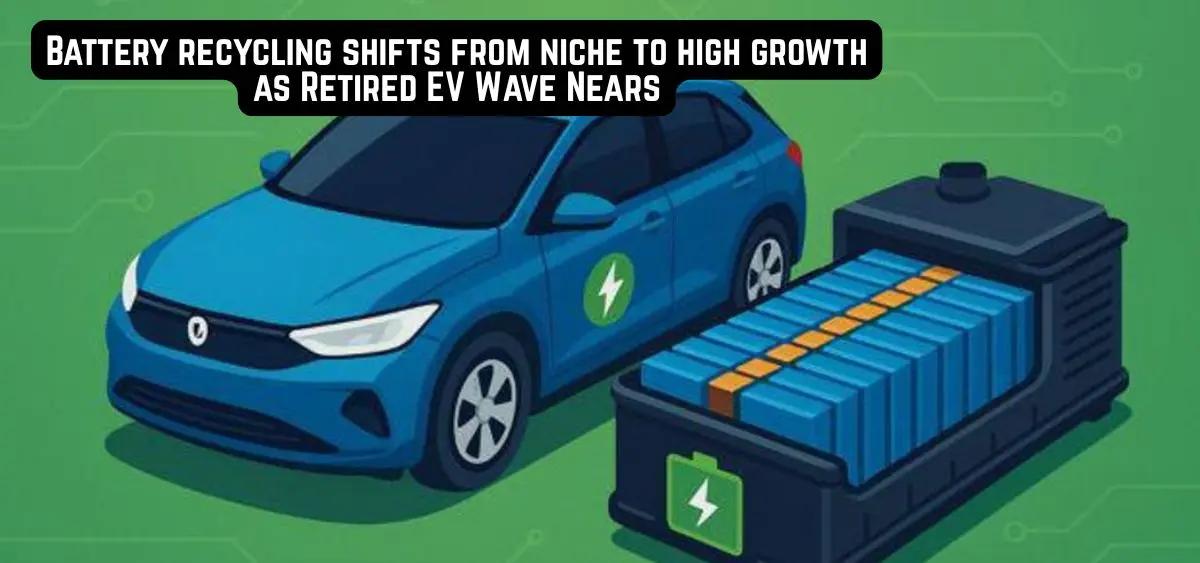

The global electric vehicle (EV) revolution is entering a new phase. While much of the focus has been on manufacturing and adoption, a powerful transformation is now taking shape behind the scenes. Battery recycling shifts from niche to high growth as the first major wave of retired EV batteries approaches after 2030. What was once a small, compliance-driven sector is rapidly evolving into a multi-billion-dollar circular economy opportunity.
Market Growth & Revenue Projections
The numbers highlight the scale of this shift. According to projections by McKinsey & Company, global revenues across the battery recycling value chain could exceed $95 billion annually by 2040, up from around $19.2 billion in 2024.
By 2030, approximately 1.2 million EV batteries are expected to reach end-of-life. That figure could surge to 5.4 million by 2040. As early-generation EVs retire, battery scrap volumes will increase dramatically, creating a strong supply of recyclable materials. This is precisely why Battery recycling shifts from niche to high growth in the coming decade.

Major automakers such as BMW, Volkswagen, and Renault are no longer treating recycling as just regulatory compliance. They are investing in dedicated recycling hubs and automated disassembly lines to secure critical minerals and reduce dependency on volatile global supply chains.
Environmental & Economic Advantages
Recycling EV batteries delivers major environmental benefits compared to traditional mining.
- 58%–81% reduction in greenhouse gas emissions
- 72%–88% less water usage
- 77%–89% less energy consumption
Advanced hydrometallurgical and direct recycling technologies now recover over 95% of valuable metals such as lithium, cobalt, and nickel. This significantly lowers environmental impact while preserving strategic resources. The environmental case further strengthens why Battery recycling shifts from niche to high growth in the global sustainability agenda.
Regulatory Push Accelerates the Transition
Policy frameworks are accelerating industrialization. The European Union’s Battery Regulation mandates at least 70% lithium recovery by 2030 and introduces minimum recycled content requirements in new batteries from 2031. The Critical Raw Materials Act requires 25% of raw materials to come from regional recycling, reducing reliance on foreign supply chains.
Additionally, digital battery passports, required from February 2027 in many regions, will track battery life cycles, ensuring transparency, ethical sourcing, and proper recycling compliance.
Key Industry Challenges
Despite its growth potential, challenges remain. Transporting used batteries—classified as dangerous goods—can account for nearly 50% of recycling costs. Furthermore, diverse battery chemistries, including the rising use of lithium iron phosphate (LFP), demand specialized and sometimes costly extraction technologies.
The Circular Economy Opportunity
As EV adoption accelerates globally, the industry must manage end-of-life batteries responsibly. The convergence of rising volumes, environmental urgency, regulatory mandates, and automaker investment ensures that Battery recycling shifts from niche to high growth is not just a trend—it is a structural transformation shaping the future of sustainable mobility.

Related Articles:-